Nykteri Wine: Santorini's Traditional Dry White
What Nykteri wine is, how it differs from Assyrtiko, and where to try it in Santorini. A practical guide to taste, PDO rules, oak ageing, food pairings and winery tastings.
Most visitors arrive in Santorini knowing one wine word: Assyrtiko. The second word worth learning is Nykteri.
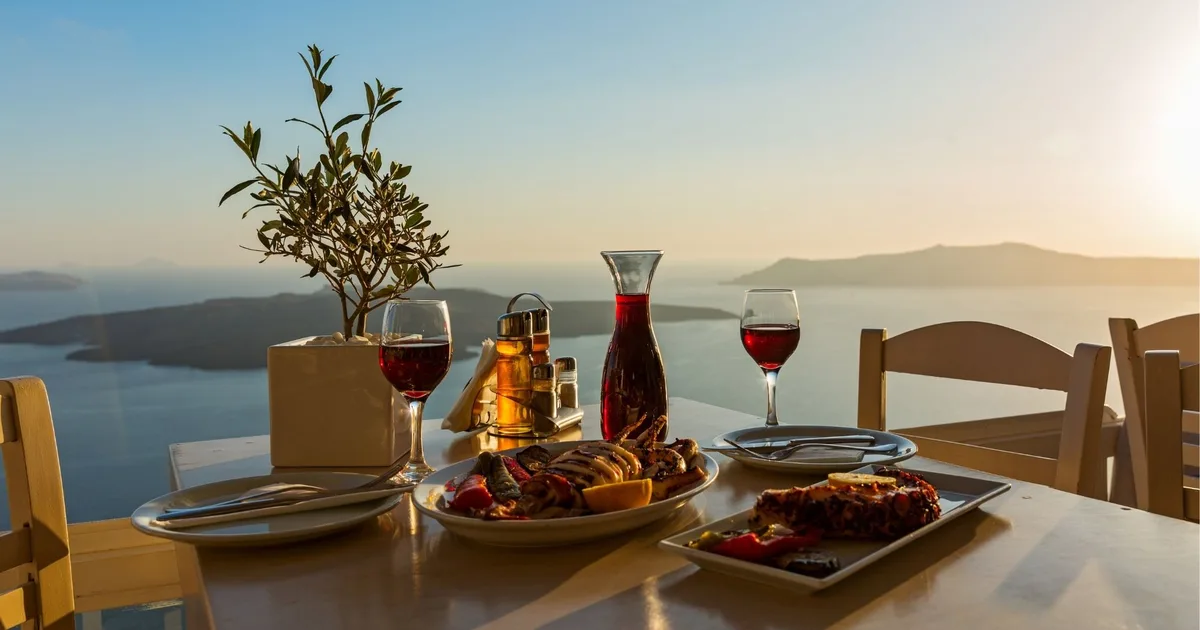
Nykteri is a traditional dry Santorini wine style built around the island’s native white grapes and, today, governed by the PDO Santorini rules. It is generally richer, more powerful and more mature in style than a straightforward young Assyrtiko.
Check Availability
Under the current PDO rules, a wine labelled Nykteri must have at least 13.5% alcohol and spend at least three months in oak barrels. Because it is a dry PDO Santorini wine, the current blend rules also mean at least 85% Assyrtiko, with Athiri and Aidani permitted in the remainder.
That combination gives Nykteri a very different personality from the crispest stainless-steel Assyrtiko. Expect more body, more texture and often flavours of ripe citrus, stone fruit, honey, nuts, spice and oak — while the acidity and saline structure of Santorini still run through the wine. If you are doing a serious wine tasting on the island, Nykteri is one of the best wines to compare directly with a standard Santorini Assyrtiko.
Nykteri at a glance
| Origin | Santorini, Greece |
| Wine style | Dry white wine |
| PDO | Santorini |
| Main grape | Assyrtiko |
| Current dry PDO blend rule | At least 85% Assyrtiko |
| Minimum alcohol for Nykteri indication | 13.5% |
| Minimum oak ageing | 3 months |
| Typical character | Rich, structured, dry, high-acid, fuller-bodied |
| Common flavours | Ripe citrus, stone fruit, herbs, honey, nuts, spice, toast |
| Best comparison | Taste beside a young Santorini Assyrtiko |
| Best with | Grilled fish, octopus, shellfish, richer seafood, roast poultry, hard cheese |
Short version: Nykteri is Santorini’s traditional richer dry white style. Think Assyrtiko with more weight, ripeness and oak influence rather than a completely different grape.
What is Nykteri wine?
Nykteri is a traditional designation within PDO Santorini for a particular style of dry white wine. It is not a grape variety, and that distinction matters:
- Assyrtiko = grape
- Santorini = protected wine origin
- Nykteri = traditional dry wine style within PDO Santorini
- Vinsanto = traditional sweet Santorini wine style
Modern Nykteri is therefore closely tied to Assyrtiko. The current PDO Santorini rules allow dry wines to contain at least 85% Assyrtiko, with up to 15% Athiri and Aidani. Nykteri then adds its own requirements: minimum 13.5% alcohol and at least three months in oak. Those rules push the wine towards greater ripeness, concentration and structure.
How do you pronounce Nykteri?
A practical English approximation is nik-TEH-ree. The Greek spelling is Νυχτέρι, and the name is connected with the Greek word for night. You may also see the wine written as Nykteri or Nychteri — “Nykteri” is the spelling most travellers are likely to encounter on modern English-language wine labels and winery lists.
Why is it called Nykteri?
The name is traditionally associated with night-time winemaking. Historically, grape harvesting and pressing on Santorini could continue late into the night, and the traditional style became associated with grapes being processed promptly after harvest while work continued after dark.
You will often see the story simplified to “Nykteri means grapes harvested at night.” That is a little too neat. The deeper tradition concerns the broader practice of night-time harvest and vinification work; it is not a modern legal rule that the grapes must literally be picked after sunset. Today’s PDO definition focuses on the finished wine’s origin and style, including alcohol and oak ageing, and does not require producers to perform the entire harvest at night. So think of the name as a historical link to Santorini’s winemaking culture, not a literal checklist for modern production.
Is Nykteri made from Assyrtiko?
Mostly, yes. Under the current PDO Santorini rules for dry wine, Assyrtiko must make up at least 85% of the blend. The remainder can include Athiri and Aidani. Many producers use a very high proportion of Assyrtiko, and some may make their interpretation entirely or almost entirely from the grape. That is why comparing Nykteri with a standard Assyrtiko is so useful — you are often tasting closely related raw material expressed through a different combination of ripeness, concentration and maturation.
Nykteri vs Assyrtiko: what is the difference?
This is the most common point of confusion. Assyrtiko is a grape variety. Nykteri is a wine style.
A straightforward Santorini Assyrtiko might be picked for freshness, fermented in stainless steel, unoaked and released relatively young. Nykteri is generally fuller and more concentrated, higher in alcohol, matured in oak for at least three months, richer in texture and more powerful at the table.
Simple comparison
| Young Santorini Assyrtiko | Nykteri |
|---|---|
| Crisp | Richer |
| Citrus-driven | Riper citrus and stone fruit |
| Often unoaked | Oak ageing required |
| Leaner texture | Broader texture |
| Very fresh | More mature and powerful |
| Great with simple seafood | Handles richer dishes |
| Best starting point | Better second comparison wine |
This does not mean Nykteri is automatically “better.” A hot afternoon beside the sea may be the perfect moment for a simple, sharp Assyrtiko. Nykteri makes more sense when you want depth, food pairing or a wine to sit with for longer.
What does Nykteri taste like?
The exact flavour depends on producer, vintage, vineyard and oak regime. Typical characteristics can include lemon peel, ripe citrus, peach, apricot, stone fruit, dried herbs, salt or saline notes, honey, nuts, toast, vanilla or sweet spice, and smoky or savoury tones.
The wine should still retain freshness — that is crucial. Assyrtiko’s naturally high acidity is what prevents a powerful, high-alcohol white from becoming heavy. A good Nykteri often feels substantial without losing energy.
Is Nykteri dry or sweet?
Nykteri is dry. This is worth emphasising because Santorini also produces Vinsanto, an intensely sweet wine. The two traditional styles sit at opposite ends of the spectrum.
Nykteri is dry, powerful, Assyrtiko-led, oak-aged, and high in acidity and alcohol. Vinsanto is sweet, made from sun-dried grapes, long oxidatively aged, and shows raisin, caramel, coffee and dried-fruit character. If a tasting includes both, Nykteri should come well before Vinsanto.
Is Nykteri always oaked?
Under the current PDO rules, a wine carrying the Nykteri indication must spend at least three months in oak barrels. The amount of obvious oak flavour can still vary enormously. A producer may use new oak, older neutral barrels, different barrel sizes, longer ageing than the minimum, or varying proportions of oak contact. So one Nykteri may taste distinctly toasted and spicy, while another may show oak mainly through texture rather than obvious vanilla or wood aromas. Do not assume all Nykteri tastes “woody.”
Why is Nykteri stronger than ordinary white wine?
Nykteri must reach at least 13.5% alcohol, and many examples can feel more substantial than simple fresh whites. There are two connected reasons. First, Santorini is a hot, dry region where grapes can achieve significant ripeness. Second, the traditional idea of Nykteri is built around concentration and maturity, not lightness.
Assyrtiko is particularly suited to this because it can reach high ripeness while still retaining strong acidity. That is unusual — many white grapes become soft and flat as sugar, and therefore potential alcohol, increases. Assyrtiko can stay remarkably sharp. Our guide to Santorini’s vineyards and volcanic wine explains the soils, old vines and basket-shaped kouloura behind that resilience.
Does higher alcohol mean Nykteri tastes alcoholic?
Not necessarily. Balance matters more than the number on the label. A 14% or higher white wine can feel heavy if it lacks acidity. Nykteri normally has plenty of acidity, which gives it structure and keeps the wine moving across the palate. The alcohol may still add body, warmth and richness, but in a well-made wine it should feel integrated rather than hot.
How is Nykteri different from barrel-aged Assyrtiko?
This is a subtler comparison. Not every barrel-aged Assyrtiko is necessarily labelled Nykteri. A producer can make an oak-matured Assyrtiko under PDO Santorini without using the traditional Nykteri indication. To use Nykteri, the wine must meet the specific requirements attached to that term, including the minimum alcohol level and barrel ageing.
So barrel-aged Assyrtiko describes a winemaking choice, while Nykteri is a protected traditional indication attached to PDO Santorini. In the glass, however, the styles can overlap — which is why reading the label and asking the winery how the wine was made can be more useful than relying purely on flavour.
Is Nykteri a late-harvest wine?
You may see Nykteri described as a late-harvest style. Historically, the traditional wine was associated with very ripe grapes and substantial concentration. But “late harvest” can be misleading to modern wine drinkers because it often suggests a sweet wine. Nykteri is dry. It is better to think of it as a ripe, powerful, oak-matured dry Santorini style rather than using “late harvest” as the whole definition.
Why does Nykteri work so well in Santorini?
The style depends heavily on Assyrtiko’s unusual structure. Santorini is hot, very dry, windy and intensely sunny, yet Assyrtiko retains striking acidity. That means producers can make a richer, more alcoholic wine without losing freshness. The island’s low-yielding vineyards also contribute concentrated fruit.
Can Nykteri age?
Yes. Good Nykteri can age particularly well because it combines several useful structural elements: high acidity, concentration, alcohol, oak maturation and strong dry extract. With bottle age, the flavours may evolve from fresh citrus and fruit towards honey, nuts, wax, dried herbs, preserved lemon, spice and savoury tones. The oak also becomes less obvious over time.
How long a specific bottle can age depends on producer and vintage, but serious Santorini whites are capable of developing for years rather than needing to be consumed immediately. If a winery offers an older Nykteri, it can be far more interesting than simply tasting the newest release.
What food goes with Nykteri?
Nykteri is a strong food wine because it combines acidity with body. It can handle dishes that overwhelm lighter white wines.
Grilled fish — excellent, especially with sea bass, sea bream, grouper and swordfish. Choose Nykteri when the fish has more char, olive oil or richer accompaniments.
Octopus — grilled octopus is an especially natural pairing. The wine’s acidity cuts through the texture while its savoury character works with smoke and char.
Shellfish — try with prawns, lobster, crab and scallops. Richer Nykteri can work particularly well with shellfish served in butter or creamy sauces.
Calamari — a good choice when the dish is grilled rather than simply fried.
Roast chicken — this is where Nykteri can outperform a lighter Assyrtiko. Oak, texture and alcohol give it enough weight for poultry, especially with herbs or lemon.
Pork — richer Nykteri can work surprisingly well with pork, particularly when the dish includes herbs, citrus or Mediterranean spices.
Hard cheese — try aged Greek or Mediterranean cheeses. The acidity refreshes the palate while the wine has enough body to stand up to stronger flavours.
Santorini fava — the island’s yellow split-pea purée works with both Assyrtiko and Nykteri. Choose Nykteri if the dish includes richer toppings such as caramelised onions or substantial olive oil.
What temperature should Nykteri be served at?
Do not serve it too cold. A simple young white can tolerate aggressive chilling, but Nykteri benefits from a slightly warmer serving temperature so its texture, oak and aromas can emerge. Around 10–12°C is a useful starting point. If it comes straight from an ice bucket and tastes closed, leave it in the glass for a few minutes.
What glass should you use?
A medium-to-large white-wine glass works well. Avoid tiny narrow glasses if you are trying a serious bottle. Nykteri benefits from enough bowl space for ripe fruit, oak, savoury aromas and bottle-age complexity to develop. You do not need specialist stemware while travelling, but a proper wine glass makes a noticeable difference compared with a tiny tasting thimble.
Best wineries to try Nykteri in Santorini
Nykteri appears in the portfolios of several Santorini producers. The best option depends on what else you want from the visit.
If you would rather not choose a single producer, the Wine Tasting Tour with Snacks (4.97 stars, 754 reviews, from $197) is the clearest option on the island that pours Assyrtiko, Nykteri and Vinsanto in that order across three cellars, in both a morning and a sunset version. Our breakdown of that tour covers both routes.
Santo Wines
Best for: first-time visitors, comparing several Santorini styles, caldera views
Santo Wines produces Nykteri alongside standard Assyrtiko, reserve wines and Vinsanto, which makes it an easy place to taste Nykteri in context. The most useful approach is to try standard Santorini Assyrtiko, then Nykteri, then an aged or reserve Assyrtiko, then Vinsanto. That progression shows how dramatically Santorini’s native grapes can change with ripeness and ageing. Read our full Santo Wines Santorini guide.
Gavalas Winery
Best for: traditional atmosphere and indigenous grapes
Gavalas is a good match for Nykteri because the winery already emphasises Santorini’s older wine traditions and native varieties. A visit here provides a more intimate contrast to the island’s largest tasting centres. If you see Nykteri included in a tasting alongside rare local grapes, that is an especially useful flight.
Koutsoyannopoulos Wine Museum
Best for: wine history plus a broad tasting
The current Silver tasting at the Santorini Wine Museum includes Nykteri alongside other local styles. That is useful for beginners because you can first learn about Santorini’s historic wine production and then taste one of its traditional dry styles.
Venetsanos Winery
Best for: Nykteri with caldera views
Venetsanos is worth considering if you want the wine experience combined with a scenic terrace and historic winery architecture. The setting is very different from a technical cellar tasting, but trying a richer Santorini white while looking across the caldera can still be a memorable introduction.
Other producers
Nykteri availability changes by vintage and producer. Some wineries focus more heavily on varietal Assyrtiko, single-vineyard wines or other interpretations of mature Santorini whites. If Nykteri specifically matters to you, check the current tasting list rather than assuming every winery pours one.
Should you book a Nykteri-specific tasting?
Usually not. Nykteri is most educational when tasted beside another Santorini white. A useful flight would include fresh Assyrtiko, Nykteri, single-vineyard or aged Assyrtiko, and Vinsanto. This lets you separate grape character, ripeness, oak, ageing and sweetness. A single glass of Nykteri can be enjoyable. A side-by-side comparison teaches you much more.
How should beginners taste Nykteri?
Forget complicated tasting vocabulary and ask four simple questions.
Does it feel heavier than the Assyrtiko before it? Notice body and texture.
Can you taste the oak? Look for toast, vanilla, spice and nuts — or perhaps the oak simply makes the wine feel rounder.
Is the acidity still strong? Even with more alcohol and body, the wine should retain freshness.
How long does the flavour last? Nykteri often has a longer, more powerful finish than a simple young white. That alone can make the contrast obvious.
Nykteri vs Vinsanto
These are both traditional Santorini wine names, but they are completely different styles.
| Nykteri | Vinsanto |
|---|---|
| Dry | Sweet |
| White wine | Sweet wine from white grapes |
| Assyrtiko-led | Assyrtiko-led blend |
| Minimum 13.5% alcohol | Naturally concentrated by sun-drying |
| At least 3 months oak | At least 24 months oxidative ageing |
| Citrus, stone fruit, oak, herbs | Raisin, fig, coffee, caramel, nuts |
| Main-course wine | Dessert/cheese/meditation wine |
If you visit Santorini, try both — they show how versatile the same island and related grapes can be. Read our Vinsanto wine guide.
Nykteri vs ordinary Greek white wine
Nykteri tends to be more structured and intense than the light white wines many travellers associate with Greek tavernas. It is usually not designed simply to be cold, inexpensive, neutral or easy to drink quickly. Instead, it belongs closer to serious food-oriented white wine.
If you enjoy white Burgundy, barrel-aged Chardonnay, mature dry Riesling or structured Mediterranean whites, you may find Nykteri especially interesting. It does not taste exactly like any of those wines, but the comparison helps set expectations around weight and seriousness.
Is Nykteri expensive?
It is usually more expensive than an entry-level Greek white. Several factors contribute: low Santorini vineyard yields, expensive grape material, high tourism and land pressure, oak maturation, limited production and ageing before release. Nykteri also sits naturally above simple young Assyrtiko in many producers’ ranges.
That said, price varies widely. A tasting is often the best way to decide whether the richer style is worth the premium to you before buying a bottle.
Should you buy a bottle of Nykteri in Santorini?
Yes if you find one you genuinely like. It can make a particularly good bottle to take home because it represents a more specific Santorini tradition than a generic Greek white. Before buying, check whether the producer exports to your country, whether the vintage is available at home, whether the wine is winery-exclusive, your luggage allowance, and whether the winery ships internationally.
If you are choosing between several bottles, an older Nykteri or limited release may make a more interesting souvenir than a widely exported current vintage.
When should you drink Nykteri?
You have two good options. Drinking it young emphasises ripe fruit, fresh acidity, oak and power, which works particularly well with food. Letting it age can soften the structure and add honey, nuts, wax and savoury complexity. If you buy more than one bottle and the producer considers it age-worthy, opening one now and keeping another can be an interesting experiment.
Is Nykteri worth seeking out if you already tried Assyrtiko?
Yes — especially because you already have a reference point. The differences become much easier to recognise. A visitor who tastes Nykteri without ever trying a standard Santorini Assyrtiko may simply think “rich white wine.” A visitor who tastes them side by side can see what extra ripeness does, what oak changes, how Assyrtiko’s acidity survives in a heavier style, and why Santorini white wine is more diverse than one grape name suggests.
Is Nykteri good for people who do not like oaky wine?
Possibly. The oak requirement does not mean every Nykteri tastes aggressively of wood. Older or larger barrels can provide maturation without dominating the wine with vanilla and toast. If you dislike heavily oaked Chardonnay, tell the winery host and ask for a Nykteri where the oak is more integrated. You may still enjoy the style because Assyrtiko’s acidity and saline character can keep the wine far fresher than many heavily oaked whites.
Is Nykteri only made in Santorini?
The protected traditional indication Nykteri is tied to PDO Santorini, and that is what gives the name meaning. You may encounter Assyrtiko grown elsewhere in Greece and matured in oak, but that does not make it Santorini Nykteri. This is another reason to pay attention to the exact wording on a wine label.
What should a good Santorini tasting include?
If you want to understand the island’s wines and not just drink them, aim for variety. An excellent first tasting would include young Assyrtiko, Nykteri, mature or single-vineyard Assyrtiko, Aidani or another indigenous white, Mavrotragano or another local red, and Vinsanto. Six well-chosen wines like these are more useful than ten similar dry whites. For broader planning, see our complete Santorini wine guide.
Independent winery visit or wine tour?
If Nykteri is one item on a longer list of wines you want to understand, a guided multi-winery tour can work particularly well.
Visit independently if you have chosen a winery with a specific Nykteri you want, you want a longer tasting, you already know Greek wine, or you have suitable transport. Choose a wine tour if this is your first Santorini wine day, you want to compare producers, everyone in your group wants to taste, you want to avoid driving, or you want explanations between stops.
A Santorini wine tasting tour can also reduce the risk of choosing several wineries that all pour similar flights.
Frequently asked questions
What is Nykteri wine?
Nykteri is a traditional dry PDO Santorini wine style. Under current rules, it must have at least 13.5% alcohol and spend at least three months in oak.
Is Nykteri a grape?
No. Nykteri is a wine style. Assyrtiko is the main grape used.
Is Nykteri made from Assyrtiko?
Yes. Because Nykteri is a dry PDO Santorini wine, the current rules require at least 85% Assyrtiko, with Athiri and Aidani permitted in the remainder.
Is Nykteri dry?
Yes. Nykteri is a dry white wine.
Is Nykteri sweet?
No. Do not confuse it with Vinsanto, Santorini’s traditional sweet wine.
What does Nykteri taste like?
Typical flavours can include ripe citrus, stone fruit, herbs, honey, nuts, toast and spice, with high acidity and a substantial texture.
Is Nykteri aged in oak?
Yes. The Nykteri indication requires at least three months of oak-barrel maturation.
How strong is Nykteri?
It must have at least 13.5% alcohol under current PDO rules.
Why is it called Nykteri?
The name is connected with “night” and Santorini’s traditional practice of continuing harvest and winemaking work into the night.
What is the difference between Nykteri and Assyrtiko?
Assyrtiko is a grape. Nykteri is a traditional wine style made primarily from Assyrtiko and defined by additional rules including minimum alcohol and oak ageing.
What food goes with Nykteri?
Try it with grilled fish, octopus, richer shellfish, poultry, pork, hard cheese or Santorini fava.
Can Nykteri age?
Yes. High acidity, concentration and oak maturation give good examples strong ageing potential.
Where can I taste Nykteri in Santorini?
Santo Wines, Gavalas, the Koutsoyannopoulos Wine Museum and Venetsanos are among the places where Nykteri may appear in the current range or tasting programme. Always check the latest list before visiting specifically for it.
Final thoughts
Nykteri is the wine to try when a basic Assyrtiko has made you curious about what Santorini can do next. It takes the island’s signature grape in a richer direction: the alcohol rises, the texture broadens, oak becomes part of the wine, and ripe fruit, spice, nuts and honey can begin to appear. Yet the acidity remains, and that balance is what makes Nykteri interesting.
It is not simply “oaked Assyrtiko,” and it is not a historical curiosity kept alive for tourists. It is a protected Santorini wine style that still makes sense at the table today. If you are visiting the island, taste it beside a young Assyrtiko instead of on its own — the comparison will teach you more about Santorini wine in ten minutes than reading another page of tasting notes.
Explore our Santorini wine tasting tours to compare Assyrtiko, Nykteri, Vinsanto and other local wines across several wineries without having to drive between tastings.
Taste Santorini's Volcanic Wines at Three Wineries
Assyrtiko, Nykteri and Vinsanto poured where they are grown, on ash that has never seen phylloxera — finishing at the caldera rim for sunset. Hotel pickup and free cancellation included.
Check Availability & Book