Vinsanto Explained: Santorini's Sweet Wine
What Vinsanto is, how sun-dried grapes and years of oxidative ageing make it, what it tastes like, what to eat with it, and where to try it on Santorini.
Santorini is known for bone-dry Assyrtiko, but the island’s most distinctive wine sits at the opposite end of the spectrum. Vinsanto is Santorini’s traditional sweet wine, made from white grapes harvested ripe, dried in the sun until the sugars and acids concentrate, then fermented slowly and aged for years.
The result can be extraordinary: dried apricot, raisin, fig, orange peel, caramel, coffee, nuts and spice, with enough acidity underneath to stop all that sweetness turning heavy. It is also the wine visitors most often misunderstand — Santorini Vinsanto is not Italian Vin Santo, and the difference is not just spelling.
Check Availability
Vinsanto at a glance
| Origin | Santorini, Greece |
| Wine style | Naturally sweet wine from sun-dried grapes |
| PDO | Santorini |
| Main grape | Assyrtiko |
| Other permitted grapes | Aidani, Athiri and small quantities of other authorised local whites |
| Colour | Amber to deep brown with age |
| Typical flavours | Raisin, dried apricot, fig, orange peel, honey, caramel, coffee, nuts, spice |
| Sweetness | Sweet |
| Acidity | High for a dessert wine |
| Minimum maturation | 24 months oxidative ageing for PDO Vinsanto |
| Best served | In a small glass, lightly chilled |
| Best with | Salty cheese, nuts, dried fruit, caramel or coffee desserts — or on its own |
Short version: Vinsanto is the sweet wine of Santorini, usually Assyrtiko-led, made from grapes dried under the Aegean sun and then aged for years. The defining feature is not the sweetness but the balance between enormous concentration and the island’s naturally high acidity.
What is Vinsanto?
Vinsanto is a traditional sweet wine produced within the PDO Santorini appellation.
The grapes are harvested very ripe and laid out in the sun to lose water. As they dehydrate, the sugars, acids, aromas and flavours all concentrate. The dried grapes are pressed and the intensely sweet juice ferments slowly — and because the sugar concentration is so high, fermentation stops before all of it can convert to alcohol. The finished wine is therefore naturally sweet, with no sugar added.
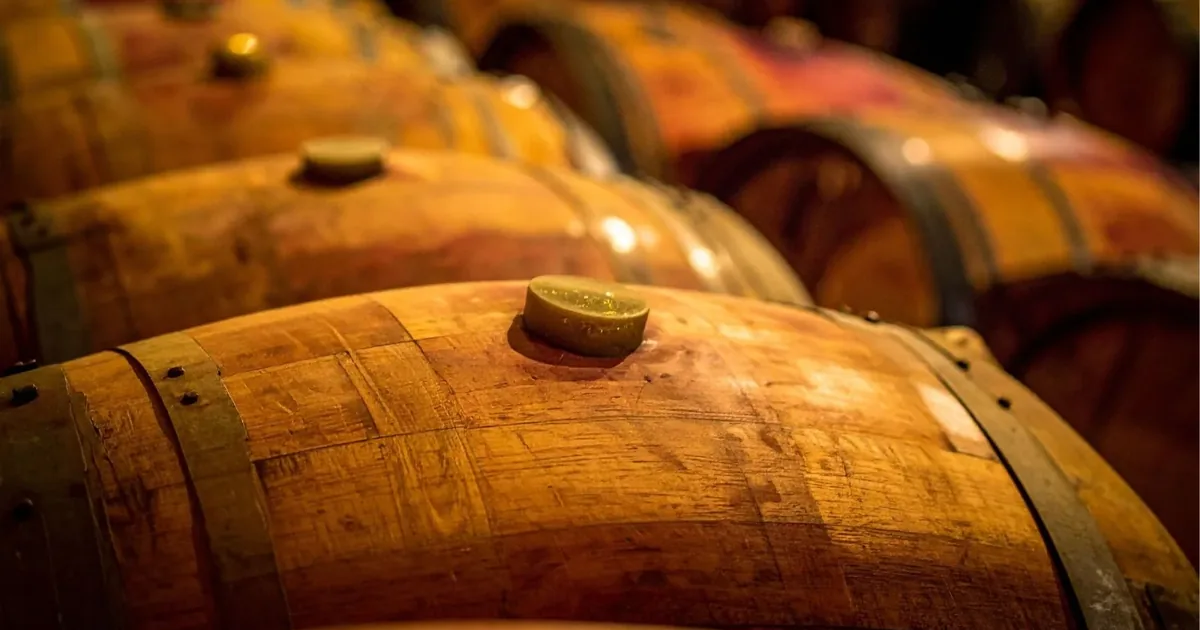
It then spends a long period ageing, traditionally with deliberate exposure to oxygen in barrel. That ageing changes the wine dramatically. Fresh grape flavour moves towards dried fruit, caramel, coffee, nuts, spice, tobacco-like notes, orange peel, honey and molasses, and the wine darkens and deepens with time.
Is Vinsanto from Santorini?
When you see Vinsanto as a protected Santorini indication, yes.
PDO Santorini covers Thira and Thirasia. Within the appellation, producers make dry white wines as well as sweet wines from dried grapes.
For PDO Santorini Vinsanto, Assyrtiko must make up at least 51% of the blend. Other authorised local whites can be included, especially Aidani and Athiri, along with smaller permitted quantities of varieties such as Gaidouria, Katsano, Moschato Aspro, Monemvasia, Platani, Potamisi and Roditis.
In practice many well-known Vinsantos are strongly Assyrtiko-led. Santo Wines currently produces aged Vinsantos based on 85% Assyrtiko and 15% Aidani.
Vinsanto vs Vin Santo: are they the same thing?
No. This is the single most useful distinction to understand.
Santorini Vinsanto
- Greek, from Santorini
- PDO Santorini
- Usually led by Assyrtiko
- Made from sun-dried white grapes
- Naturally sweet
- Characteristically high in acidity
- Long oxidative ageing
Italian Vin Santo
- Italian, most strongly associated with Tuscany
- Usually made from Italian varieties such as Trebbiano and Malvasia
- Grapes traditionally dried after harvest
- Produced under different regional rules and traditions
The two share the broad idea of concentrating grapes by drying, but they are not interchangeable styles.
Even the name has generated debate. One widely repeated interpretation links “Vinsanto” to vino di Santorini — wine from Santorini — although the real history of the term is messier than that neat story suggests. For travel purposes the distinction is simple: if you are tasting Vinsanto on Santorini, you are tasting a Greek wine rooted in the island’s own vineyard tradition.
What grapes are used in Vinsanto?
The most important grape is Assyrtiko, and it matters because Assyrtiko holds very high acidity even in Santorini’s hot, dry climate.
High acidity is crucial in a sweet wine. Without it, a wine carrying a large amount of residual sugar feels syrupy and tiring. Assyrtiko gives Vinsanto the freshness and structure to balance the concentration.
- Assyrtiko contributes high acidity, structure, mineral and saline character, and ageing potential.
- Aidani often brings softer texture, floral character, aromatic complexity and roundness.
- Athiri can contribute delicacy, fruit and finesse.
The exact blend depends on the producer, and one of the more interesting things to compare in a Santorini tasting is how different proportions and ageing regimes produce quite different Vinsantos.
How is Vinsanto made?
The process sounds simple. The reality is slow, expensive and demanding.
1. The grapes are harvested ripe
Santorini already has naturally low yields because of the dry volcanic environment, old vines and fierce winds. Fruit destined for Vinsanto is allowed to reach substantial ripeness.
2. The grapes are dried in the sun
After harvest they are laid out under the Aegean sun. Official Greek wine information describes a typical drying period of roughly 8–12 days, though individual producers vary, and some accounts put it closer to a fortnight.
The important point is that drying concentrates everything — sugar, acidity, flavour, aroma and extract. That is why a great Vinsanto can be both intensely sweet and surprisingly fresh.
3. The dried grapes are pressed
Because the grapes have lost so much water, the amount of juice is very small. You need a large quantity of fruit to make relatively little wine, which is one of the reasons Vinsanto is expensive.
4. Fermentation begins slowly
The juice can be extremely concentrated. Yeast struggles in that environment, so fermentation is slow and eventually stops with substantial residual sugar remaining — which is what makes the wine naturally sweet.
5. The wine ages for years
PDO Santorini rules require at least 24 months of oxidative maturation. Older versions carry ageing indications such as 4, 8, 12, 16 or 20 years, and some of the most extraordinary Santorini Vinsantos spend decades developing before release.
What does Vinsanto taste like?
Young and old Vinsanto differ considerably, but the common flavours are raisin, sultana, dried apricot, dried fig, quince, orange peel, marmalade, honey, caramel, molasses, coffee, cocoa, nuts, cinnamon and baking spice. Older wines tend to become darker and more savoury.
What surprises most people is the acidity. A good Vinsanto is very sweet, but it should never feel like drinking syrup — Assyrtiko gives it a sharp backbone that keeps the wine energetic. That tension between sweetness and acidity is the defining feature of the style.
Is Vinsanto very sweet?
Yes. It is a genuine dessert wine, not an off-dry white. Some examples carry well over 200 grams of residual sugar per litre — Santo Wines’ current 12-year-aged Vinsanto lists around 242 g/L, while still holding very high acidity.
That sounds enormous, and it is. Yet the wine can feel far more balanced than the number suggests, because the acidity is concentrated too. Which is exactly why you should taste Vinsanto rather than judge it from a sugar figure.
Is Vinsanto fortified?
Not necessarily, and the classic naturally sweet style should not be confused with simply adding alcohol.
PDO Santorini permits more than one category of sweet wine from dried grapes, including naturally sweet and fortified styles. The Vinsanto most visitors meet at the leading wineries is a naturally sweet wine from sun-dried grapes, where the sweetness comes from concentration and incomplete fermentation rather than added sugar or spirit. Check the specific bottle if you want to be sure.
Why is Vinsanto so expensive?
- Very low grape yields. Santorini already has some of the lowest-yielding vineyards in Europe — dry, windy, volcanic, and full of old vines.
- Drying removes water. Deliberate dehydration means even less juice per kilogram of fruit.
- Fermentation is difficult. Extremely concentrated must is hard to ferment.
- Long ageing. A producer has money tied up in a barrel for years before a bottle can be sold.
- Evaporation during ageing. Wine is lost through the barrel over time; the longer the ageing, the smaller the final volume.
- Limited vineyard land. Santorini is one of the world’s most tourism-intensive islands, and vineyard land competes directly with development.
Genuine aged Vinsanto is never going to be a cheap wine.
Is expensive Vinsanto worth it?
If you enjoy sweet wines, the older versions can be extraordinary — but you do not need to start with the most expensive bottle. Compare instead: try a younger Vinsanto first, then an older one if the winery pours it by the glass or in a premium tasting.
You may notice deeper colour, greater concentration, less obvious fruit, more coffee and nuts and spice, a longer finish, and smoother integration between sweetness and acidity.
Older is not automatically better for every palate. Some people prefer the fresher dried-fruit character of a younger wine.
How long can Vinsanto age?
Potentially for decades. High sugar and high acidity are both powerful natural preservatives, and long oxidative maturation makes the style particularly stable.
Estate Argyros is especially famous for long-aged Vinsanto and keeps vintages spanning many years. Santo Wines also bottles after extended ageing, including 12- and 20-year examples.
For most travellers the lesson is not that you should cellar a bottle for thirty years. It is that Vinsanto is the best wine on Santorini for demonstrating what long ageing actually does. If a winery offers an older vintage beside a current release, the comparison is worth paying for.
Vinsanto vs sweet Muscat
If you are used to sweet Muscat, Vinsanto will feel much darker and more savoury. Muscat is intensely aromatic, with obvious floral, grape and citrus notes. Vinsanto tends towards dried fruit, caramel, coffee, spice, nuts and oxidation-derived complexity — less about perfume, more about concentration and age.
Vinsanto vs Port
Both can be sweet and powerful, but they are very different wines. Most Port is red or dark, fortified with grape spirit, made in Portugal, and higher in alcohol. Santorini Vinsanto is usually made from white grapes, naturally sweet through drying, lower in alcohol than most fortified wines, and driven by acidity as much as sweetness.
If you find Port too alcoholic but enjoy rich dessert wines, Vinsanto is an interesting alternative.
Vinsanto vs Sauternes
Both sweet and age-worthy, but the concentration happens differently. Sauternes is famous for grapes affected by noble rot; Vinsanto concentrates by sun-drying harvested grapes.
That gives a different profile. Sauternes shows apricot, honey, saffron and botrytis complexity; Vinsanto moves more strongly towards dried fruit, coffee, caramel, nuts and oxidative notes.
What should you eat with Vinsanto?
Two good strategies: match sweetness with sweetness, or contrast it with salt.
Caramel desserts
An excellent pairing — caramel tart, crème caramel, toffee desserts, baked fruit with caramel. The caramelised flavours echo the wine.
Dried fruit and nuts
One of the easiest matches. Figs, walnuts, almonds, hazelnuts and dried apricots all pick up flavours already in the glass.
Coffee or chocolate desserts
Older Vinsanto develops coffee and cocoa notes, so tiramisu, coffee cake, dark chocolate and chocolate-and-nut desserts all work. Very sweet milk chocolate can make the pairing feel excessive; darker and more bitter works better.
Salty blue or aged cheese
One of the best combinations of all. Roquefort, blue cheese, strongly aged hard cheese, salty Greek cheese. The salt cuts the sweetness while the wine softens the cheese.
Drink it on its own
Good Vinsanto does not need dessert. The oldest and most complex versions are often more enjoyable alone at the end of a tasting.
How should Vinsanto be served?
In a small dessert-wine glass. You do not need a large pour — the wine is concentrated and a little goes a long way.
Serving temperature
Aged Santo Wines examples recommend around 8°C, which is a useful starting point. Serve it cool, but not so cold that the aromas disappear. If the wine seems closed immediately after pouring, let it sit in the glass for a few minutes.
Where should you try Vinsanto in Santorini?
Most serious producers make or pour Vinsanto, but three wineries are especially useful if you want to understand the style rather than take a single sip.
Estate Argyros
Best for: ageing, serious wine tasting, comparing styles
Estate Argyros has built a particularly strong reputation around Vinsanto. The winery’s own history highlights Yiannis Argyros’s work in demonstrating the quality and longevity of the style, and its Vinsanto programme includes releases aged for extended periods.
Importantly for visitors, Vinsanto is included even in the introductory tasting. The Estate Argyros Welcome experience covers four wines plus Vinsanto, while the longer tasting explores the ageing potential of the style alongside different expressions of Assyrtiko.
If Vinsanto is a main reason for your winery visit, Argyros belongs near the top of the list. It is the guaranteed first stop on the morning route of the Wine Tasting Tour with Snacks (4.94 stars, 764 reviews, from $189) — a high-volume tour that spells out Assyrtiko, Nykteri and Vinsanto as the styles you will taste, in that order. Our breakdown of the tour covers both its routes.
Santo Wines
Best for: first-time visitors, several aged Vinsantos, caldera views
Santo Wines produces several versions, including long-aged releases. Its current 12-year example is 85% Assyrtiko and 15% Aidani, and it has also released a 20-year-aged Vinsanto. A good place to taste the style if you also want the classic panoramic Santo experience.
Santo is the guaranteed final stop on the Small-Group Sunset Wine Tour with Santo Winery (4.91 stars, 927 reviews, from $200). Read our full Santo Wines Santorini guide for tasting prices and how to get there.
Domaine Sigalas
Best for: a broader Assyrtiko context near Oia
Domaine Sigalas includes Vinsanto in a portfolio running from dry Assyrtiko and Nykteri to Aidani and Mavrotragano, and it is convenient for travellers staying near Oia. Visits require advance booking, and the best reason to go is to taste Vinsanto in the context of the estate’s broader range.
Sigalas appears as a rotating stop on both the tours above rather than a guaranteed one, so confirm the day’s route if it is specifically why you booked. Our best wineries in Santorini guide compares all ten in more detail.
Should you book a Vinsanto-specific tasting?
Usually, no.
For a first experience, Vinsanto is far more useful as the final wine in a broader Santorini tasting. A good sequence runs:
- young dry Assyrtiko;
- richer or aged Assyrtiko;
- Nykteri;
- perhaps an indigenous red;
- Vinsanto.
That progression makes the sweet wine much more interesting, because you can see how the island’s grapes behave in completely different styles.
A dedicated Vinsanto or old-vintage tasting becomes worthwhile once you already know you like the wine.
The best way to taste Vinsanto
Do not drink it quickly. Take a small sip and focus first on the balance:
- Is the sweetness heavy or fresh?
- How sharp is the acidity?
- Do you taste fresh fruit or mostly dried fruit?
- Are there coffee or caramel notes?
- Can you notice nuts or spice?
- How long does the flavour stay after swallowing?
Then compare it with another Vinsanto if you can. The differences between producers and ages are easier to spot than beginners expect.
Two practical things that make the whole tasting land better: eat — every tour serves cheese, capers, rusks and tomato fritters for a reason, and twelve glasses on an empty stomach is a rough afternoon — and take the morning slot if the wine is the point, because the cellars are cooler and your palate is fresher at 11am than at 6pm.
Can you buy Vinsanto to take home?
Yes — most producers sell bottles directly. Four things to think about first.
- Bottle size. Dessert wines are often sold in smaller formats, because pours are small and production is limited.
- Age. Older releases cost considerably more.
- Availability at home. Some major Santorini producers export widely, so a standard bottle may be available from specialist merchants in your country. Older vintages and limited releases are the ones genuinely worth carrying.
- Luggage. If you are flying with hand luggage only, remember the liquid restrictions. Ask whether the winery ships or has an export partner.
Does Vinsanto go off after opening?
Not quickly, compared with a delicate dry white. Because it is high in sugar and already suited to oxidative ageing, Vinsanto generally keeps well once opened. Refrigerate the bottle and seal it properly.
A younger Vinsanto stays enjoyable for a good while, and old oxidative examples are particularly resilient. The exact lifespan depends on the bottle, so use aroma and taste rather than a rigid number of days.
Is Vinsanto only a dessert wine?
Technically it sits in the sweet/dessert category, but treating it only as something to pour beside cake undersells it. Aged Vinsanto works very well as a digestif-style final glass, a cheese wine, a contemplative wine on its own, part of a vertical tasting, or a contrast after dry Assyrtiko.
If the wine is particularly old and complex, a very sweet dessert can actually distract from it.
Where Vinsanto sits among Santorini’s other wines
Vinsanto is the last pour of a Santorini tasting, and it makes far more sense once you know what came before it.
Assyrtiko is the island and the reason the wines travel. Under the PDO rules a dry Santorini must be at least 85% Assyrtiko, and the style is uncompromising: very high acidity, low pH, bone-dry, with a saline finish people argue about the cause of. Our complete guide to Assyrtiko covers the six styles worth comparing.
Why Vinsanto makes more sense after tasting Assyrtiko
Assyrtiko is the thread connecting Santorini’s dry and sweet wines, and the order you taste them in does real work.
Taste a young Assyrtiko first and you notice high acidity, citrus, saltiness and mineral structure. Then taste Vinsanto. The fruit has changed completely — lemon has become fig and orange peel, the wine has gone from pale to amber — but the acidity is still there, running underneath all that sugar.
That is the connection, and it is the single most interesting thing a Santorini tasting can show you: the same grape, the same island, the same austere backbone, pushed in two opposite directions. It is also why the sweet wine is poured last, and why drinking it on its own in a bar tells you much less than drinking it at the end of a flight.
Nykteri is the same grape given oak: the appellation requires the same 85% Assyrtiko minimum, at least three months in barrel, and a minimum 13.5% alcohol. Fuller and rounder than the unoaked version, and the wine most likely to change a sceptic’s mind.
Aidani and Athiri are the other permitted whites, and both turn up in Vinsanto blends — Aidani floral and round, Athiri softer and lower in acid. Mavrotragano and Mandilaria are the island’s reds, a genuine minority here; you may get one on a flight, but you should not choose a tour expecting them.
And the vines themselves explain the rest. Santorini’s are trained into kouloura, low circular baskets resting on the ash, so the fruit ripens sheltered from a wind that would strip an upright canopy. The soil holds too little clay for phylloxera to move through, so the island never replanted on American rootstock and its root systems are original and often very old. Low yields, volcanic ash, relentless sun, no irrigation — that is why there is so little juice, and why Vinsanto costs what it does.
Is Vinsanto worth trying if you do not like sweet wine?
Yes, at least once.
People often say they do not like sweet wine because their experience is with inexpensive wines that are sweet and lack acidity. Vinsanto is different. A good example is unquestionably sweet, but it can also be sharp, savoury, nutty, bitter-edged, intensely aromatic and surprisingly fresh.
You may still decide dessert wine is not for you. But Vinsanto is a useful style to test that assumption on, because its structure is so unusual.
Frequently Asked Questions
What is Vinsanto wine?
Vinsanto is a traditional sweet wine from Santorini made from sun-dried white grapes. Assyrtiko is the principal grape, usually supported by local varieties such as Aidani and Athiri.
Is Vinsanto the same as Vin Santo?
No. Santorini Vinsanto and Italian Vin Santo are separate traditions with different origins, grapes and appellation rules. Both involve drying grapes, but they are not interchangeable styles.
Is Vinsanto sweet?
Yes. It is a genuinely sweet dessert wine — some examples carry over 200 g/L of residual sugar — but high acidity keeps it from tasting syrupy.
What grape is Vinsanto made from?
PDO Santorini Vinsanto must contain at least 51% Assyrtiko. Aidani, Athiri and several other authorised local white grapes may also be used.
Is Vinsanto red or white wine?
It is made from white grapes, although ageing gives it a deep amber, brown or mahogany colour that can look much darker than a conventional white.
How is Vinsanto made?
Ripe grapes are harvested and dried in the sun to remove water and concentrate sugar, acidity and flavour. The concentrated juice ferments slowly and stops while sugar remains, and the wine then undergoes extended oxidative ageing.
How long is Vinsanto aged?
PDO Vinsanto requires at least 24 months of oxidative maturation. Many producers release wines aged for substantially longer — 4, 8, 12, 16 or 20 years, and occasionally decades.
What does Vinsanto taste like?
Dried apricot, raisin, fig, orange peel, honey, caramel, coffee, nuts and spice, over a sharp line of acidity. Older wines are darker and more savoury.
What should I eat with Vinsanto?
Salty blue or aged cheese, dried fruit, nuts, caramel desserts, coffee desserts or dark chocolate. Good older examples are also excellent on their own.
Should Vinsanto be chilled?
Yes, lightly. Around 8°C is a good starting point, though the exact recommendation depends on the producer. Not so cold that the aromas close up.
Where can I taste Vinsanto in Santorini?
Estate Argyros, Santo Wines and Domaine Sigalas are the best-known producers where Vinsanto forms part of a broader Santorini tasting. Argyros includes it even in the introductory flight.
Is Vinsanto expensive?
It can be, especially long-aged releases. Low vineyard yields, sun-drying, tiny juice volumes and years of maturation all raise the cost of production.
Is old Vinsanto better than young Vinsanto?
Not automatically. Older Vinsanto is darker, more concentrated and more complex; younger versions show brighter dried-fruit flavours. Comparing the two is the best way to find out which you prefer.
Final thoughts
Vinsanto is one of the wines that makes Santorini more than a beautiful island with vineyards on it.
It takes the same harsh conditions that shape dry Assyrtiko — old vines, volcanic soil, intense sun, low yields, high natural acidity — and pushes them in a completely different direction. The grapes are dried. The juice becomes extraordinarily concentrated. Fermentation struggles through all that sugar. Then the wine waits in barrel for years.
What emerges tastes of figs, orange peel, coffee, caramel and nuts, and the remarkable part is the acidity running through all of it.
If you are visiting, do not skip it because you “do not drink sweet wine.” Taste a small glass at the end of a proper flight — better still, compare a younger example with an aged one and see how far the wine travels with time.
Taste Santorini's Volcanic Wines at Three Wineries
Assyrtiko, Nykteri and Vinsanto poured where they are grown, on ash that has never seen phylloxera — with sunset tours finishing at a caldera-view winery. Hotel pickup and free cancellation included.
Check Availability & Book